
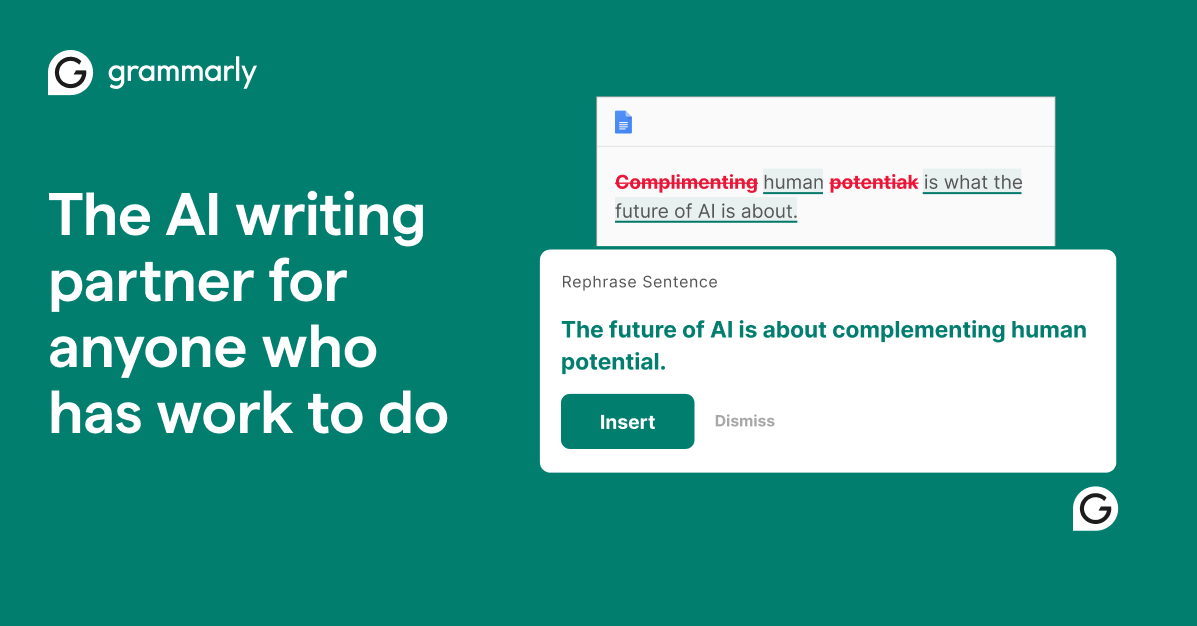
Grammarly remains the category-defining AI writing assistant, having evolved well beyond basic spellcheck into a full suite covering tone, clarity, generative rewriting, and even AI-content detection, all delivered through browser extensions, desktop apps, and deep integrations with tools like Google Docs and MS Office. Its strength is ubiquity and reliability: the suggestions are consistently useful for everyday professional writing, and its enterprise tier backs that up with real security and compliance credentials that make it viable for large organizations. The tradeoffs are the usual freemium squeeze — free users get capped AI prompts and the good stuff sits behind Plus or Enterprise pricing — and power users writing in niche domains will still find its tone and style suggestions occasionally too generic. Still, for the breadth of what it covers and how frictionlessly it inserts itself into a writer's existing workflow, it's an easy anchor recommendation in the writing-tools space.
Visit Grammarly (grammarly.com) →
Frequently asked questions
What is Grammarly?
Grammarly is a writing tool. The AI writing assistant that quietly became infrastructure for how millions write every day.
Is Grammarly free?
Grammarly is freemium: you can start on a free tier, and paid plans unlock more.
What can you do with Grammarly?
Grammarly covers Real-time grammar, spelling, and clarity proofreading across apps and websites, Tone detection and adjustable tone/style suggestions to match audience and brand voice and AI-powered full-sentence and paragraph rewrites plus generative text prompts.
What is Grammarly's launched.tools score?
Grammarly scored 86/100 in launched.tools' independent review — rated “Highly recommended”.
More in Writing

Explore our AI suite and get more done: Translate speech, text, and media, or integrate the DeepL API.

Write your novel faster with the best AI tool for fiction. Start for free today and see why The New Yorker calls it "a salvation" for writers and why The New Yo

Paperpal is a comprehensive AI academic writing tool and research assistant designed for researchers and students. Our AI-powered platform features grammar chec

Jenni is an AI research and academic writing assistant that helps students, researchers, and academics create essays, papers, and citations with ease.
Orchestrate intelligent agents to run end-to-end marketing workflows delivering speed, control, and measurable impact.

Write effortlessly and efficiently with Quillbot's suite of AI tools. Paraphrase, check grammar, analyze tone, improve fluency, and more. Start doing your best
No comments yet — be the first to say something useful.